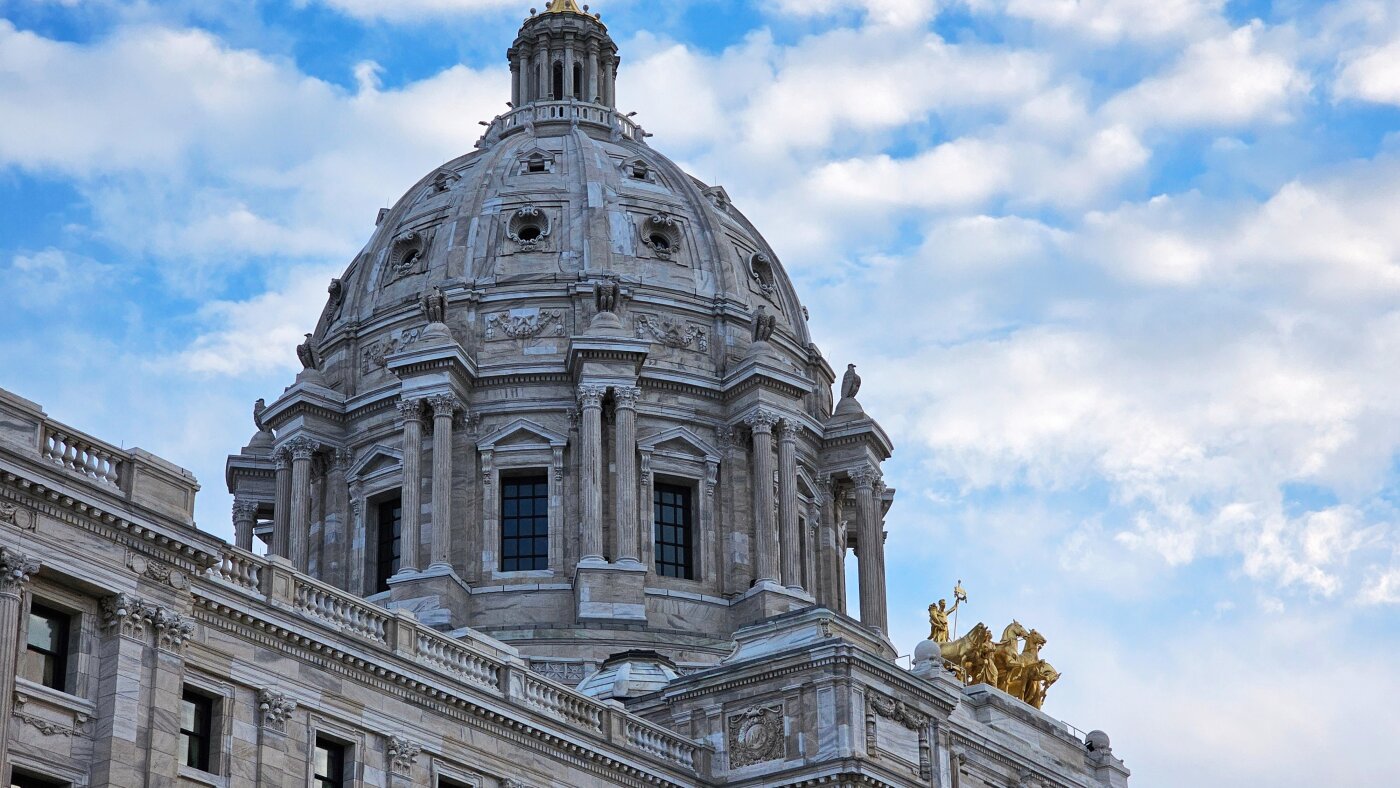
model analysis We focus on stock market intelligence, including earnings analysis, valuation trends, and sector performance tracking. Minnesota has become the first U.S. state to pass a law explicitly banning prediction markets, classifying the operation of platforms like Kalshi and Polymarket as a felony. The move represents a significant escalation in state-level legal action against the controversial industry, which has faced scrutiny over its electoral and event-based contracts.
Live News
model analysis Historical patterns still play a role even in a real-time world. Some investors use past price movements to inform current decisions, combining them with real-time feeds to anticipate volatility spikes or trend reversals. In a landmark move, Minnesota has enacted legislation that makes it a felony for prediction market companies such as Kalshi and Polymarket to operate within the state. This makes Minnesota the first jurisdiction in the United States to impose such a sweeping ban, directly targeting the burgeoning industry that allows users to trade contracts on the outcomes of elections, sports events, and other future occurrences. While dozens of states have previously taken legal or regulatory action against prediction markets—often through cease-and-desist orders or regulatory warnings—Minnesota’s law represents the first time a state has elevated the prohibition to a criminal felony. The legislation specifically targets platforms that offer event-based trading contracts, which regulators have argued function as unregistered, illegal gambling operations. The new law imposes severe penalties on companies and potentially individuals who facilitate such markets within Minnesota’s borders. The move intensifies the ongoing regulatory crackdown on prediction markets, which have grown in popularity but have drawn criticism from state and federal regulators. Kalshi and Polymarket, two of the largest players in the space, have been at the center of legal battles challenging the authority of the Commodity Futures Trading Commission (CFTC) to oversee their operations. Minnesota’s law bypasses federal questions by establishing a state-level criminal prohibition, potentially creating a template for other states considering similar measures.
Minnesota Enacts First US State Ban on Prediction Markets, Making Operation a FelonyScenario planning based on historical trends helps investors anticipate potential outcomes. They can prepare contingency plans for varying market conditions.Cross-market correlations often reveal early warning signals. Professionals observe relationships between equities, derivatives, and commodities to anticipate potential shocks and make informed preemptive adjustments.Investors often test different approaches before settling on a strategy. Continuous learning is part of the process.Monitoring multiple timeframes provides a more comprehensive view of the market. Short-term and long-term trends often differ.Analytical tools are only effective when paired with understanding. Knowledge of market mechanics ensures better interpretation of data.Risk-adjusted performance metrics, such as Sharpe and Sortino ratios, are critical for evaluating strategy effectiveness. Professionals prioritize not just absolute returns, but consistency and downside protection in assessing portfolio performance.
Key Highlights
model analysis Analyzing trading volume alongside price movements provides a deeper understanding of market behavior. High volume often validates trends, while low volume may signal weakness. Combining these insights helps traders distinguish between genuine shifts and temporary anomalies. - First-of-its-kind criminal prohibition: Minnesota is the first state to pass a law making it a felony to operate prediction markets, going beyond civil actions taken elsewhere. This could deter companies from expanding into certain states. - Targeted companies: The legislation explicitly names platforms like Kalshi and Polymarket, which have previously argued that their contracts are legal under federal commodities law. Minnesota’s move creates a direct conflict between state and federal regulatory frameworks. - Escalation of state-level action: Previously, states like Texas and Nevada have used gambling laws to challenge prediction markets, but none had passed a felony-level ban. Minnesota’s approach may signal a new phase of heightened legal risk for the industry. - Sector implications: Prediction market operators may need to geo-block Minnesota users or reconsider their regulatory strategy. The law could also encourage other states to adopt similar felony-level bans, increasing operational complexity and compliance costs. - Market context: The news comes amid ongoing uncertainty over the regulatory status of event contracts in the U.S. The CFTC has proposed rules to ban election betting, but finalization has been delayed. Minnesota’s state-level action adds another layer of legal exposure for the industry.
Minnesota Enacts First US State Ban on Prediction Markets, Making Operation a FelonySome investors integrate AI models to support analysis. The human element remains essential for interpreting outputs contextually.Understanding macroeconomic cycles enhances strategic investment decisions. Expansionary periods favor growth sectors, whereas contraction phases often reward defensive allocations. Professional investors align tactical moves with these cycles to optimize returns.Predictive analytics are increasingly used to estimate potential returns and risks. Investors use these forecasts to inform entry and exit strategies.Real-time updates can help identify breakout opportunities. Quick action is often required to capitalize on such movements.Analytical dashboards are most effective when personalized. Investors who tailor their tools to their strategy can avoid irrelevant noise and focus on actionable insights.Macro trends, such as shifts in interest rates, inflation, and fiscal policy, have profound effects on asset allocation. Professionals emphasize continuous monitoring of these variables to anticipate sector rotations and adjust strategies proactively rather than reactively.
Expert Insights
model analysis Real-time updates reduce reaction times and help capitalize on short-term volatility. Traders can execute orders faster and more efficiently. From a professional perspective, Minnesota’s move represents a potentially significant threat to the prediction market business model. If other states follow suit with felony-level prohibitions, the legal and reputational risks for platforms could increase substantially. Companies like Kalshi and Polymarket may need to reassess their geographic compliance strategies, possibly limiting access to users in states with clear bans or severe penalties. The development could also influence the broader debate over how prediction markets should be regulated. While some argue that these markets provide valuable information aggregation and hedging tools, critics contend they function as unregulated gambling, particularly when tied to political events. Minnesota’s felony classification suggests a hardening stance from state policymakers, which may pressure federal regulators to clarify the legal status of such contracts more definitively. For investors and market participants, the environment for prediction markets is likely to remain challenging in the near term. The lack of a uniform federal framework means that companies face a patchwork of state laws, with Minnesota now setting a punitive precedent. The industry would likely need to invest heavily in compliance technology and legal defense, potentially slowing growth. Any future expansion of prediction markets into new asset classes or geographies will have to navigate this evolving regulatory landscape with caution. Disclaimer: This analysis is for informational purposes only and does not constitute investment advice.
Minnesota Enacts First US State Ban on Prediction Markets, Making Operation a FelonyReal-time monitoring of multiple asset classes can help traders manage risk more effectively. By understanding how commodities, currencies, and equities interact, investors can create hedging strategies or adjust their positions quickly.Correlating futures data with spot market activity provides early signals for potential price movements. Futures markets often incorporate forward-looking expectations, offering actionable insights for equities, commodities, and indices. Experts monitor these signals closely to identify profitable entry points.While data access has improved, interpretation remains crucial. Traders may observe similar metrics but draw different conclusions depending on their strategy, risk tolerance, and market experience. Developing analytical skills is as important as having access to data.Some traders prioritize speed during volatile periods. Quick access to data allows them to take advantage of short-lived opportunities.Combining technical and fundamental analysis provides a balanced perspective. Both short-term and long-term factors are considered.Real-time monitoring allows investors to identify anomalies quickly. Unusual price movements or volumes can indicate opportunities or risks before they become apparent.